Vivo APP
72.8% of 5-star reviews
After a second survey conducted with the same individuals who were interviewed about the app's issues, 72.8% of respondents rated the new Home Page as 5 stars and stated it would solve their problems. An improvement of 36.2 percentage points.
Context
This project was developed during my postgraduate studies in Marketing at FGV and began with a sentiment analysis of user feedback on the Vivo mobile app. Reviews and comments in app stores revealed consistent patterns of dissatisfaction, prompting a deeper investigation.
To understand whether significant experience issues existed — and how to address them effectively — I conducted user research and benchmarking analysis of comparable products.
As part of this immersion, I also interviewed the app’s product manager to align user needs with the company’s strategic objectives.
The outcome was a redesign proposal that balances user empathy, operational efficiency, and business vision.
Problem
Although the Vivo app offers a wide range of features — from viewing invoices to managing plans and add-on services — the overall user experience fell short of expectations. Analysis of customer reviews in both the Apple and Google app stores revealed a consistent pattern of dissatisfaction.
Three primary pain points emerged:
Difficulty accessing basic features — simple tasks such as viewing the bill or checking mobile data usage required multiple steps and screens, making the experience confusing and inefficient.
Inferior experience compared to competitors — apps from other telecom providers received higher ratings, offering faster, more intuitive flows and easier navigation.
Lack of clarity and poor information architecture — many users were unaware of key features simply because they were difficult to find. The app’s structure caused valuable functionality to go unnoticed, leading to frustration and limiting the product’s business impact.
The Process
How I approached this project
Identifying the problem
Balancing Requirements: Business and User Needs
Defining the approach
From Concept to Interface
Identifying the problem
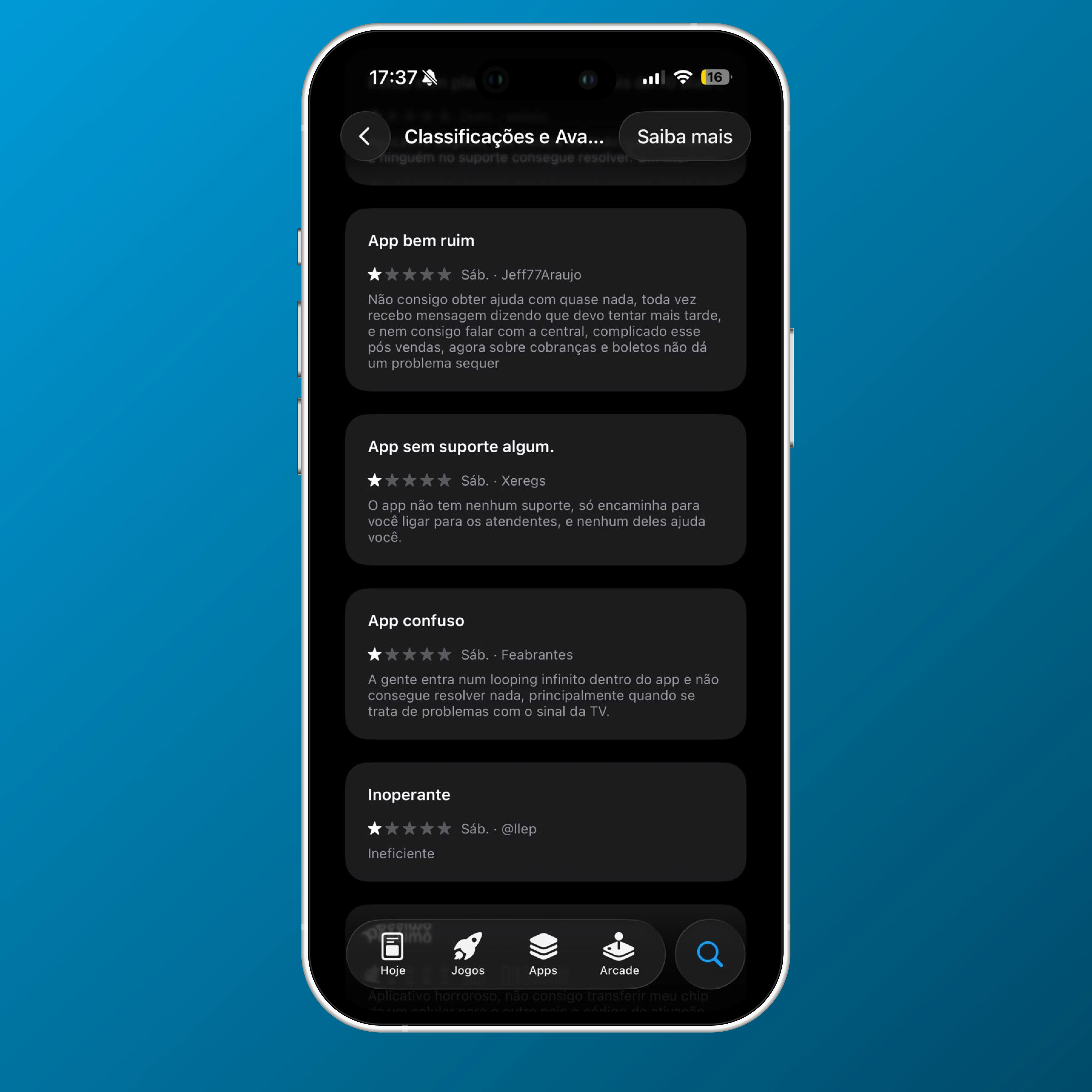
The first step was to validate whether a significant experience problem truly existed in the Vivo app. To do this, I began by analyzing user reviews on both the Google Play Store and the App Store. On both platforms, ratings were low and the same complaints appeared repeatedly:
Difficulty accessing billing information;
Lack of clear data usage information;
App reliability issues.
These initial findings indicated the need for a deeper investigation. I then conducted a benchmarking study with Vivo’s main competitors, including Claro and TIM.
In comparison, both competitors showed significantly higher ratings, particularly in terms of quick access to essential information. Data usage and billing details were prominently displayed on the home screen, reducing friction for common tasks.
To better understand these differences, I built a screenshot database of competitor apps and analyzed how their interfaces were structured. The clearer, more straightforward layouts — focused on the user journey — reinforced the conclusion that Vivo’s app had substantial room for improvement.
Balancing Requirements: Business and User Needs
An effective redesign must balance two fundamental pillars: user needs and business goals. Therefore, beyond analyzing customer feedback, I deepened my understanding of the company’s strategic priorities.
Business perspective
I conducted an interview with the manager responsible for the Vivo app. Combined with internal usage data, the conversation revealed key insights:
Audience segmentation — users are categorized by plan type and consumption profile, requiring personalized experiences.
Multiple apps — the company currently maintains two separate apps: one for individual consumers and another for businesses. A unification study is underway, particularly to better serve micro-entrepreneurs.
Overloaded support operations — a significant portion of support requests relates to billing issues and duplicate invoices, creating operational strain. Reducing this demand is a strategic priority.
User perspective
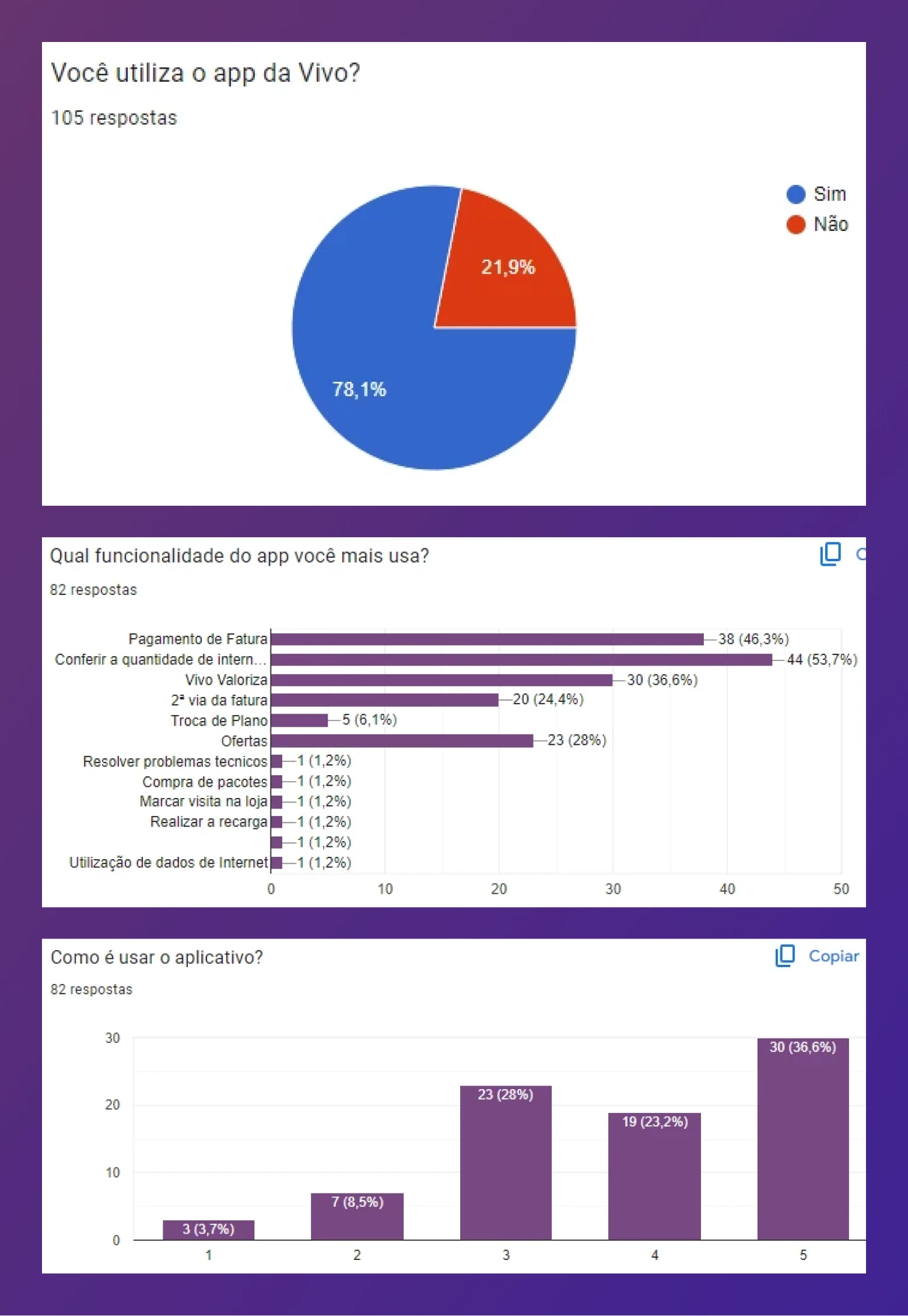
I also conducted a quantitative survey with 154 Vivo customers to map behaviors, identify patterns, and understand core needs when using the app.
Key findings:
App adoption — 78.1% of respondents reported using the app, a strong adoption rate but one that still indicates growth potential, given that the app enables management of nearly all services offered by the brand.
Overall rating — on a 1-to-5 star scale, the average score was 3.8. While 59.8% rated the app as great (5 stars) or good (4 stars), 40.2% gave it between 1 and 3 stars, revealing significant user dissatisfaction.
Most-used features — the most frequently accessed functions were:
◦ Checking data usage (53.7%)
◦ Paying bills (46.3%)
◦ Accessing Vivo Valoriza (36.6%) — a loyalty program offering discounts and perks with partner brands
These insights were critical for grounding design decisions and shaping a proposal that effectively addressed both user pain points and business objectives.
Defining the approach
Based on all the data collected in the previous stages—from market analysis to user feedback and business objectives—it was time to turn insights into direction.
This third phase focused on clearly defining the key problems to solve and beginning to structure the new app experience. The work concentrated on five main fronts:
Shortening the path to essentials: making access to invoices and data usage more direct and visible by placing this information on the home screen.
Improing app perception and usability: a more intuitive and efficient experience not only reduces friction but also increases navigation time and user engagement.
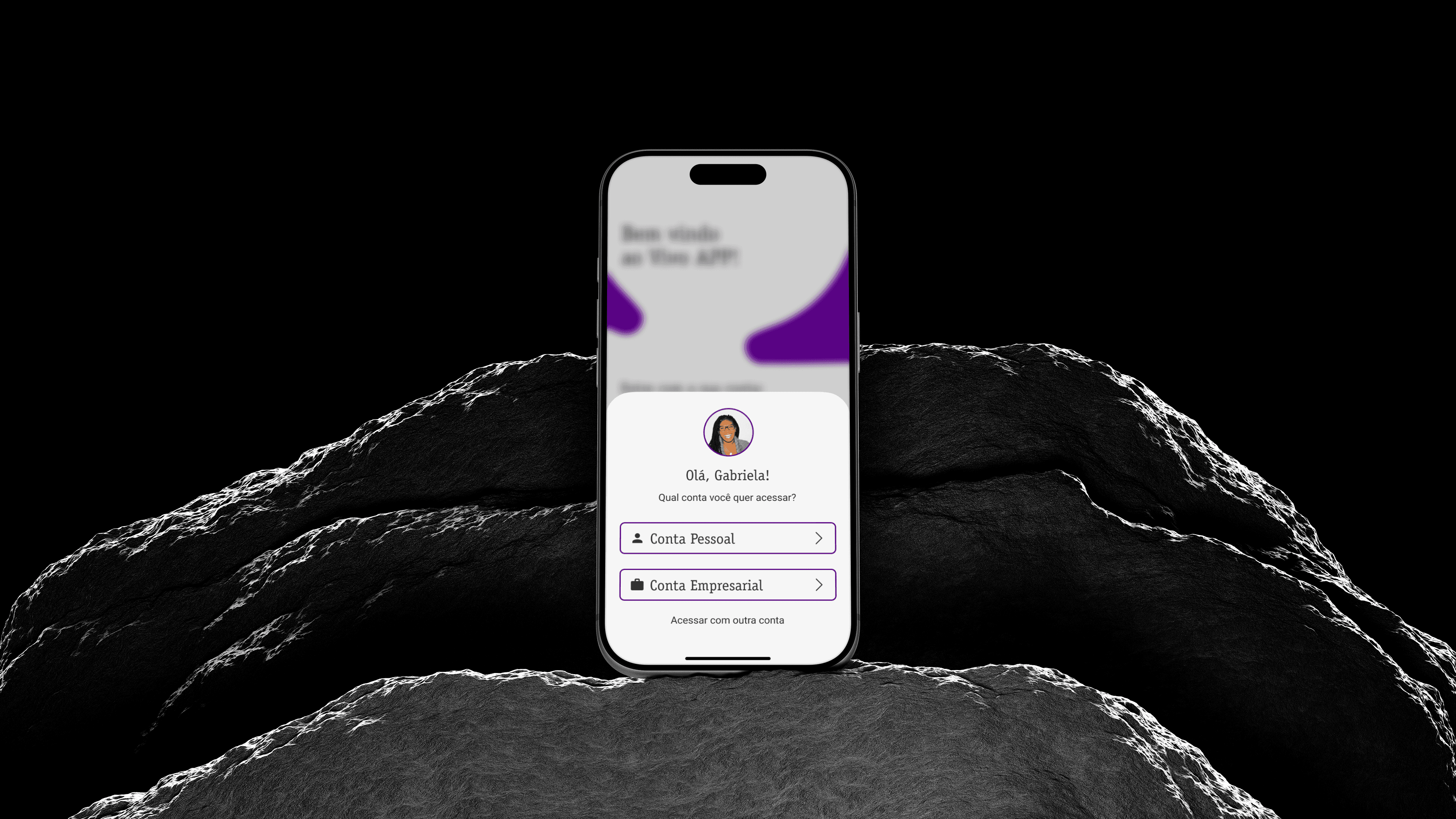
Unifying the apps: currently, individual and business customers use separate apps. One of the goals was to envision a unified login and navigation experience for both audiences, with clarity and personalization.
Highlighting secondary features: Vivo’s app includes valuable tools such as the Vivo Valoriza program, but many users are unaware of them or do not use them. Creating mechanisms to increase the visibility and usage of these features was a key part of the strategy.
Supporting business opportunities: by improving customer relationships through the app, upsell and cross-sell opportunities increase, generating a direct impact on the brand.
From these definitions, I began sketching the new user journey and initial wireframes, with a special focus on two critical points:
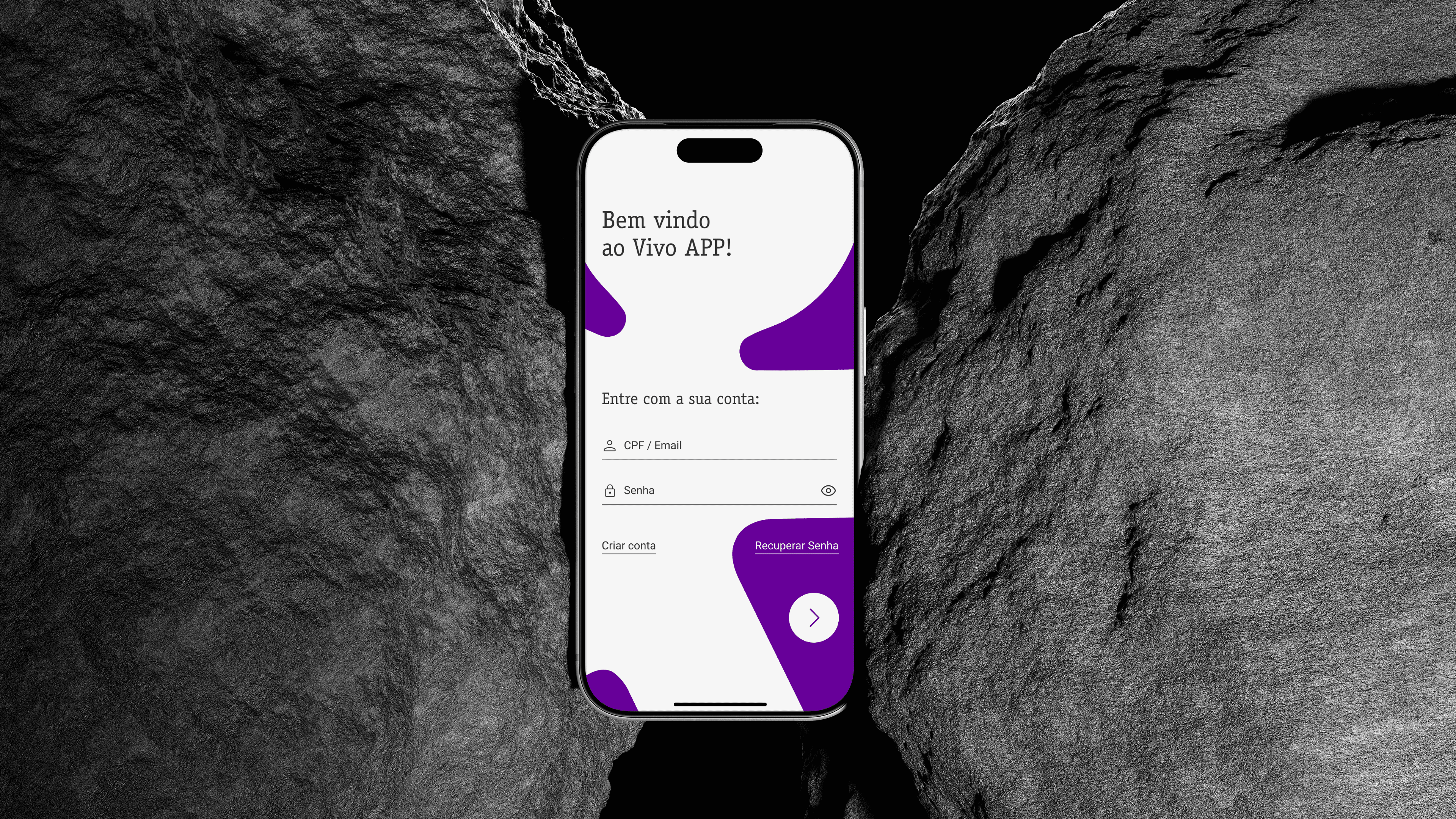
Unified login: I designed a login flow that recognizes multiple profiles (individual and business) and allows users to easily choose which account they want to access.
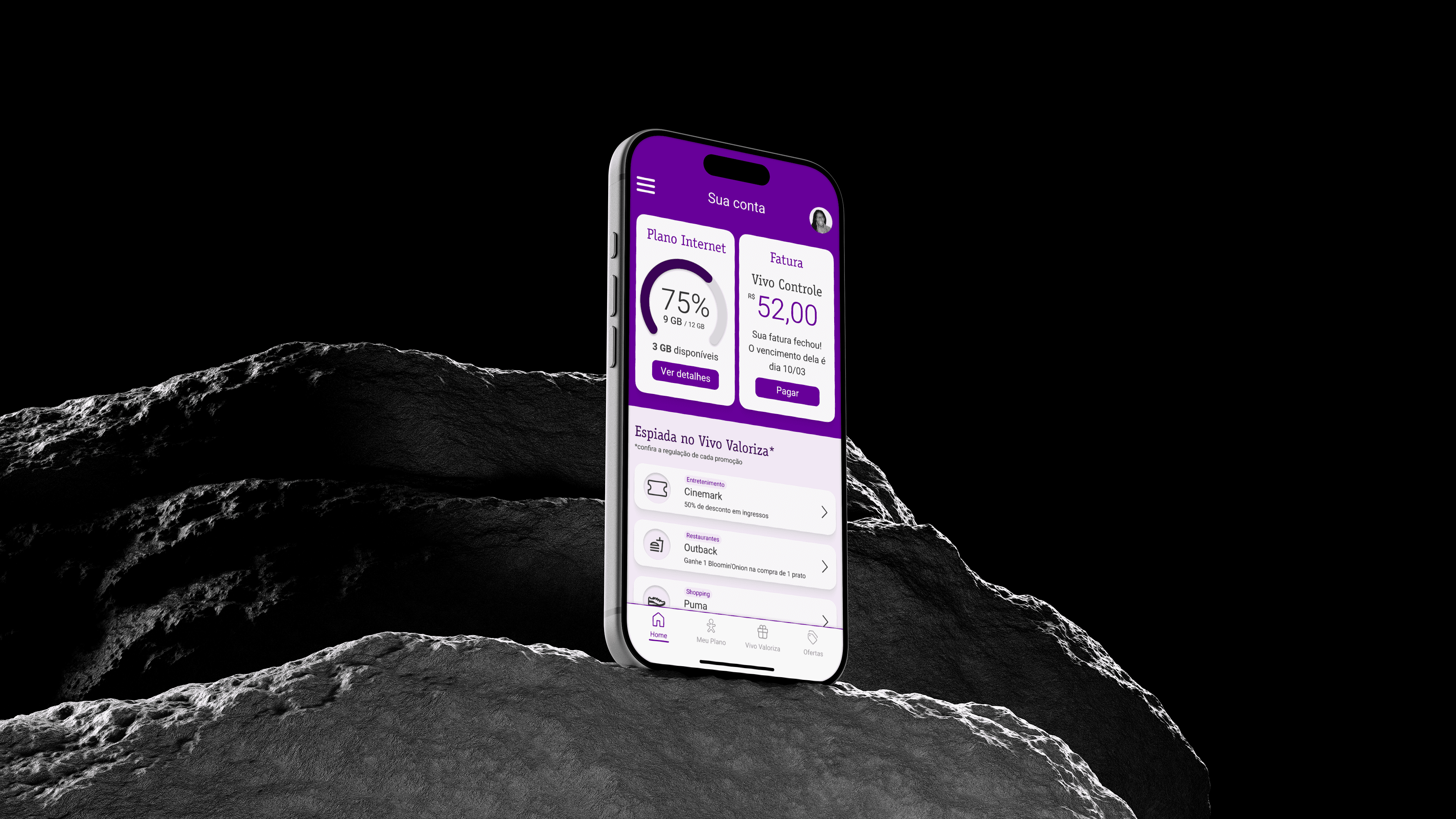
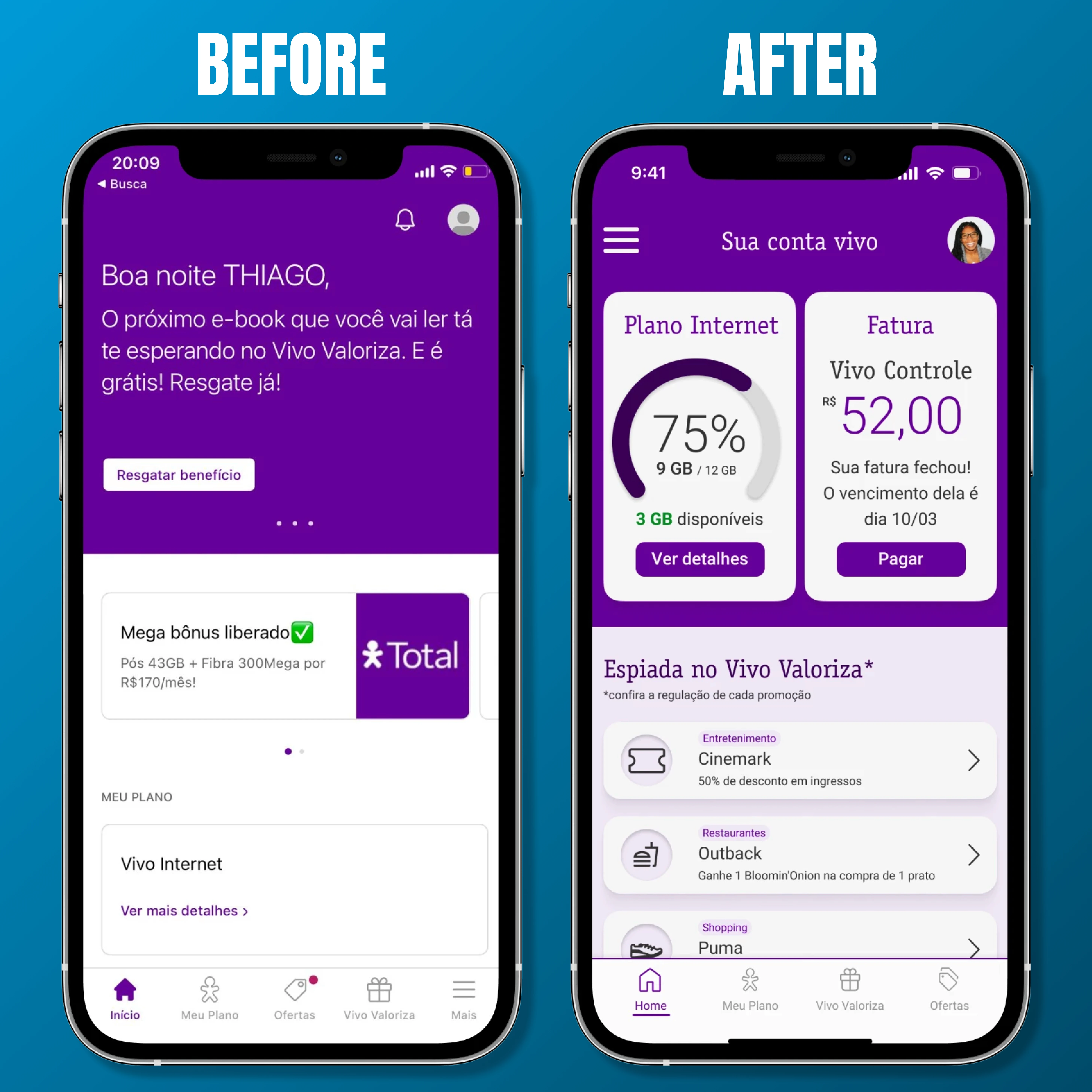
New homepage: I redesigned the app’s home screen to highlight what matters most—invoices, data usage, and shortcuts to services like Vivo Valoriza—in a clear, accessible, and responsive way.
From Concept to Interface
The fourth and final stage of this project was dedicated to bringing everything to life. Based on research, interviews, competitive analysis, and strategic definitions, I transformed the wireframes into a high-fidelity prototype, refined in every detail to deliver a smoother, more intuitive experience aligned with the real needs of both users and the company.
This new design represents not just a visual update but a structural shift in how the Vivo app communicates with its users. The result is a modern, functional, and emotionally lighter interface designed to strengthen customer relationships and expand business opportunities.
Data-driven design decisions
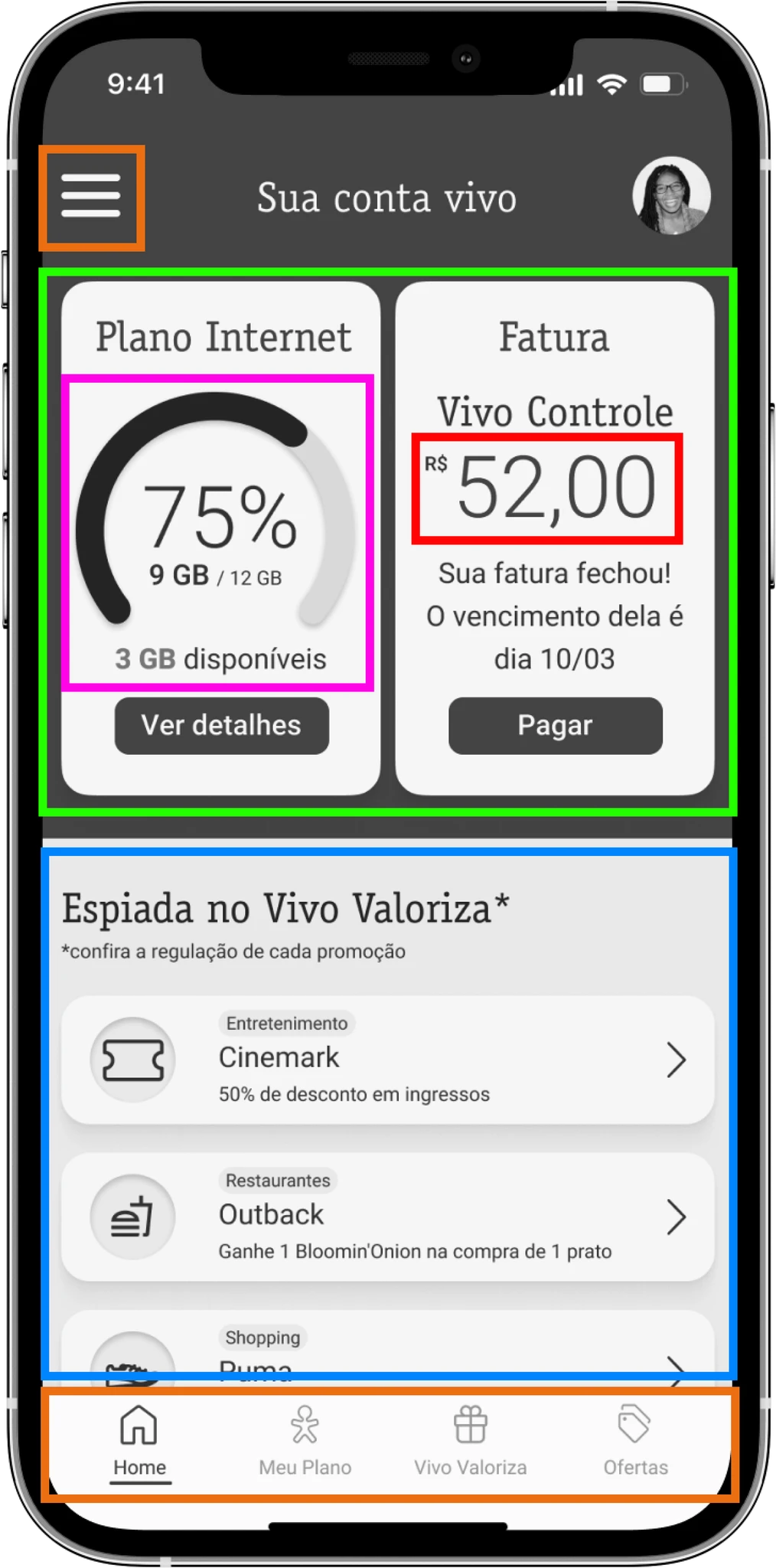
Every visual and functional element was carefully defined based on data, best practices, and UX principles. The key decisions guiding the new homepage include:
Reducing the paradox of choice
To make navigation clearer and more objective, I reorganized the bottom menus, reducing the number of visible options. The full menu was moved to the top-left corner — a location supported by heuristic analysis and widely used by popular apps, bringing familiarity and lowering the learning curve.
Focusing on what matters: invoice and usage
As identified in the research, the most-used features were invoice tracking and data usage monitoring. These were prioritized on the new homepage, enabling quick, frictionless access.
Clarity in mobile data usage
One of the main complaints was the need to “do the math” to understand remaining data. In the new design, the app clearly shows both current usage and remaining balance — eliminating ambiguity.
Emotional redesign of the invoice
The original red color used to signal unpaid invoices was replaced with purple, aligned with the brand’s visual identity. This change aims to reduce negative urgency and make the payment experience feel less stressful and more consistent with the brand.
Highlighting Vivo Valoriza
As a highly appreciated feature and a strategic asset, Vivo Valoriza was given greater prominence in the new interface. Encouraging its use makes the app more attractive, increases retention, and expands upsell and cross-sell opportunities.
Screens and extras